Application Load Speeds and Their Effect on Bonus Claim Success in Poker Rooms and Betting Platforms
Xander Foster · Jul 23, 2026
Application Load Speeds and Their Effect on Bonus Claim Success in Poker Rooms and Betting Platforms
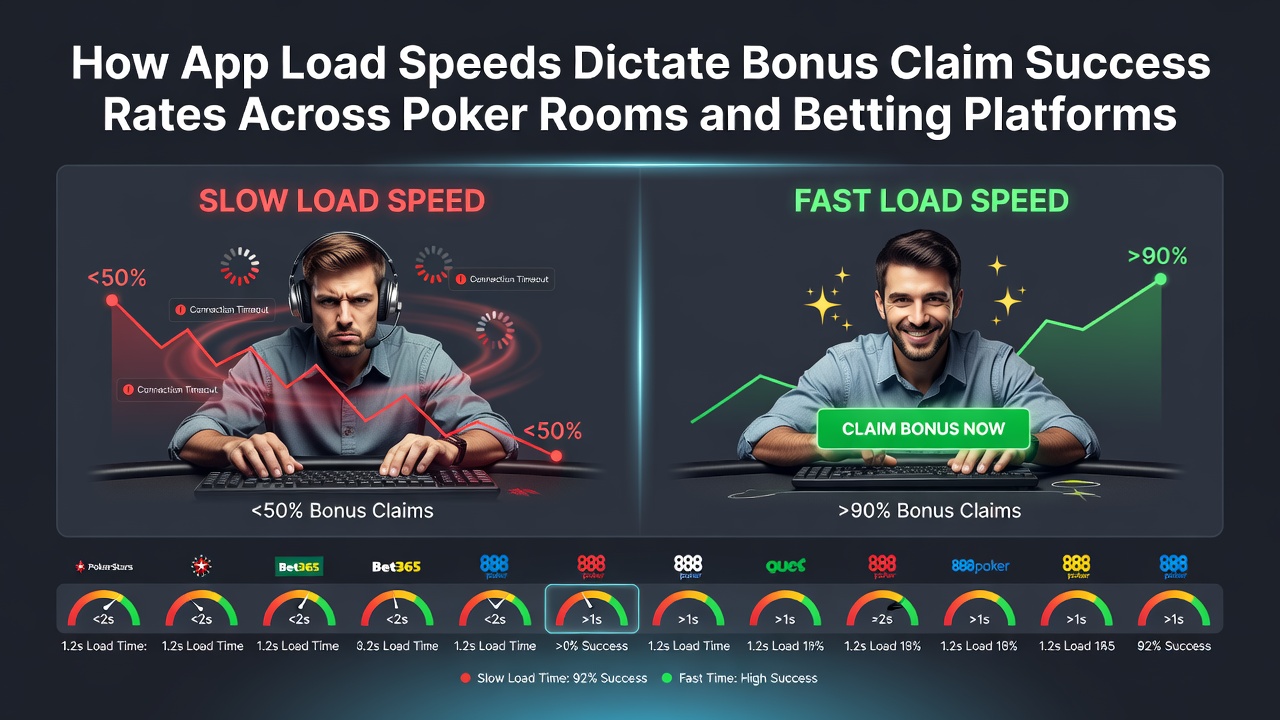
Platform operators track how quickly their applications open because load durations directly influence whether users complete bonus claims before promotional windows close. Data from multiple markets show that delays beyond three seconds correlate with higher abandonment rates during the initial steps of registration or offer activation sequences. In poker rooms, players often receive time-limited entry bonuses for tournaments, while betting platforms push deposit-match promotions that require swift navigation through verification screens. When apps take longer to respond, those sequences break, and the intended claims never finalize.
Performance Thresholds Across Major Platforms
Industry reports compiled through 2025 and into July 2026 indicate that the average load time for leading poker applications sits between 1.8 and 2.4 seconds on standard mobile connections, whereas slower outliers exceed 4 seconds during peak hours. Those slower instances see claim completion drop by measurable margins because users exit before the bonus interface appears. Betting apps face similar patterns; deposit flows that include bonus code entry fields become vulnerable when each screen transition adds latency. Observers note that platforms running on optimized content delivery networks maintain steadier performance, while those relying on legacy server clusters experience spikes that coincide with reduced bonus uptake.
User Behavior Patterns During Bonus Activation
Studies of session logs reveal that most bonus claims occur within the first thirty seconds after app launch. Users who encounter spinning loaders or delayed button responses frequently switch to alternative apps rather than wait. Poker rooms report that satellite tournament entries tied to welcome bonuses suffer the sharpest declines when load times stretch, since those offers carry strict cut-off clocks. Betting platforms see parallel effects with ongoing promotions that require users to place qualifying wagers inside narrow timeframes. The sequence typically runs as follows: launch, login, bonus menu, claim, deposit, confirm. Any single lag point in this chain increases the probability that the entire process aborts.
Regional Data and Platform Comparisons
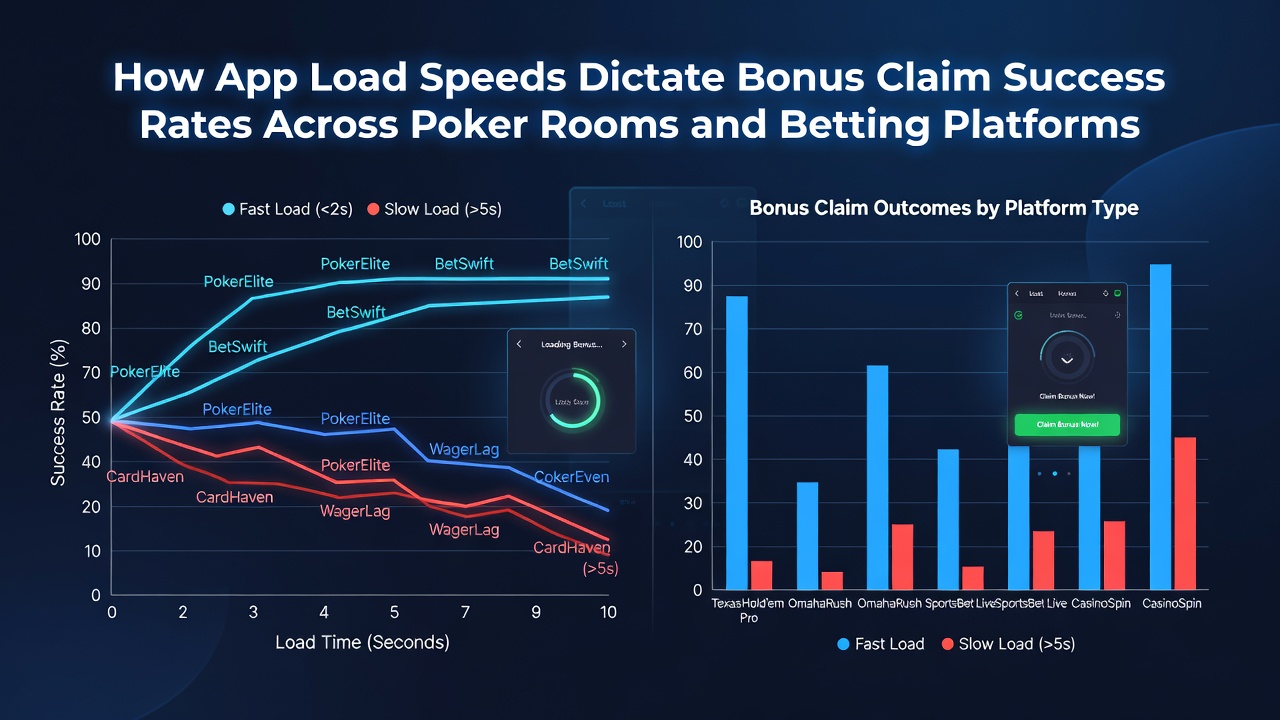
Figures released by iGaming Ontario in early 2026 documented that applications averaging under two seconds recorded bonus claim rates 14 percent higher than those averaging over three seconds during the same promotional periods. Parallel observations from the New Jersey Division of Gaming Enforcement highlighted comparable differences among licensed operators serving the same user base. In both jurisdictions, poker-focused apps showed slightly higher sensitivity to load delays than sportsbook apps, likely because poker interfaces involve more real-time data calls for table listings and player balances. Those who manage multiple accounts across platforms often discover that the fastest-loading option captures the majority of their bonus activity in any given week.
Technical Factors Driving Load Variations
Application architecture plays a central role. Native builds generally outperform hybrid frameworks when handling bonus-related graphics and form fields, though the gap narrows on high-end devices. Cached assets reduce repeated server requests, yet many promotions incorporate dynamic elements such as personalized offers or real-time countdown timers that force fresh data pulls. Network conditions amplify these differences; users on 4G connections experience longer delays than those on 5G, which shifts claim success rates depending on geography and time of day. Platform teams that implement progressive loading for bonus menus report steadier completion numbers even when full app initialization remains unchanged.
Measurement Practices and Ongoing Adjustments
Operators rely on aggregated telemetry to identify friction points rather than individual user feedback. Metrics include time-to-first-interaction, time-to-bonus-screen, and claim-success percentage broken down by device type and connection speed. When patterns emerge showing consistent drop-offs at particular load thresholds, teams adjust image compression, prioritize API calls, or introduce offline caching for promotional content. July 2026 updates from several analytics providers confirmed that incremental improvements of half a second produced measurable lifts in claim rates across both poker and betting verticals. These adjustments occur continuously because promotional calendars rotate frequently and new devices enter the market with varying performance baselines.
Conclusion
Load speed functions as a measurable gatekeeper for bonus claim success across poker rooms and betting platforms. The data assembled from regulatory reports and platform telemetry demonstrate consistent relationships between response times and completion rates, independent of promotional type or user demographics. Operators continue to refine technical stacks in response to these patterns while users gravitate toward the applications that allow them to move from launch to claim without interruption.