Examining Cross-Platform Synchronization Challenges in Modern Digital Gaming Ecosystems
Jordan Patterson · Jul 9, 2026
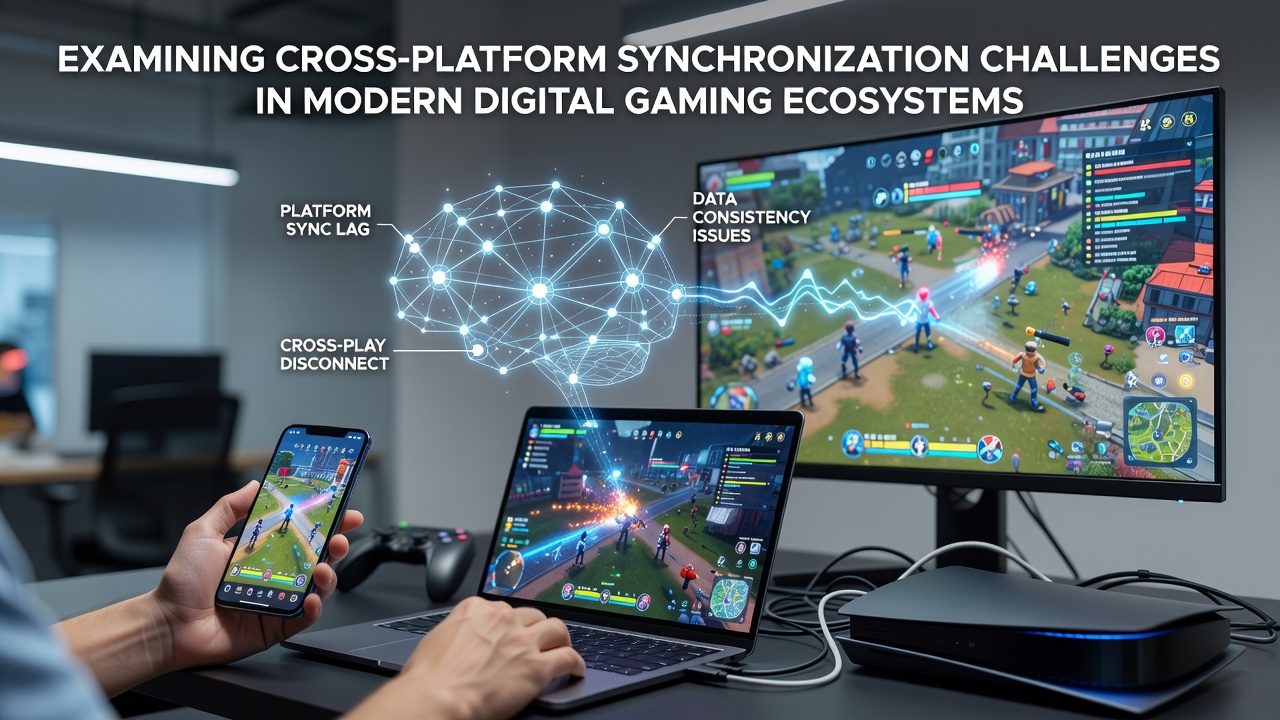
Examining Cross-Platform Synchronization Challenges in Modern Digital Gaming Ecosystems
Modern digital gaming ecosystems span consoles, PCs, mobile devices, and cloud services where players expect seamless progress across platforms, yet synchronization remains a persistent technical hurdle that developers and publishers continue to address through evolving protocols and infrastructure investments. Data consistency across these varied environments often falters due to differences in network latency, storage formats, and API compatibility, while players encounter interrupted sessions when switching between hardware during extended play periods.
Core Technical Barriers in Multi-Device Play
Observers note that cross-platform synchronization relies on cloud-based save systems and real-time data replication, but these mechanisms encounter friction when hardware specifications diverge significantly, such as between high-end PCs with rapid SSD access and mobile devices limited by cellular bandwidth constraints. Researchers at institutions like the University of California have documented cases where packet loss during peak hours disrupts state updates, leading to duplicated items or lost achievements in titles that support progression sharing. Game engines must reconcile these discrepancies through middleware layers that translate between formats, though this adds computational overhead and potential points of failure during high-traffic events.
Developers face additional complexity when integrating with multiple storefronts and their respective authentication services, because each platform enforces unique security tokens and data schemas that require constant reconciliation to prevent desynchronization. Studies from the Entertainment Software Association indicate that over 60 percent of multiplayer titles released in recent years incorporate some form of cross-play, yet many still report backend mismatches that force manual interventions like account linking resets.
Impact on Player Retention and Session Continuity
Players often discover that progress stalls when moving between devices because timestamp conflicts or incomplete uploads create version mismatches that rollback saves to earlier states, and this issue intensifies during live service updates that alter core data structures mid-session. Figures from industry reports reveal that titles relying on unified accounts experience higher abandonment rates when sync failures occur more than once per week, prompting studios to prioritize robust queuing systems that handle offline play and later merge changes without data corruption.

What's interesting here involves regional regulatory influences, as the European Union's digital single market initiatives have pushed for standardized data portability rules that affect how game saves transfer across borders and providers. In July 2026 several major publishers plan to roll out enhanced cross-save features aligned with these guidelines, incorporating blockchain-based verification to reduce tampering risks while maintaining performance across global servers.
Industry Approaches and Emerging Standards
Trade groups such as the Interactive Games and Entertainment Association have advocated for shared frameworks that allow third-party tools to manage synchronization more reliably, and companies like Valve and Sony have implemented proprietary solutions that still struggle with edge cases involving rapid device switching or large asset libraries. One study revealed that latency spikes above 150 milliseconds frequently trigger rollback mechanisms in competitive genres, whereas single-player experiences tolerate longer delays but risk narrative inconsistencies if quest flags fail to propagate correctly.
Take one developer team that noticed persistent issues in a popular battle royale title after a major patch, where mobile users lost weapon customizations upon resuming on console; the fix required rewriting the conflict resolution algorithm to prioritize the most recent local timestamp while validating against server records. Such adjustments highlight how synchronization logic must balance speed with accuracy, often at the expense of simpler implementation paths.
Future Outlook for Unified Gaming Experiences
Advances in 5G networks and edge computing promise reduced latency for cross-device interactions, yet challenges persist around data privacy compliance and varying platform policies that limit full access to user profiles. According to data compiled by the Australian Communications and Media Authority, adoption of cloud gaming services has grown steadily, placing greater emphasis on reliable backend architectures capable of handling millions of concurrent sync requests without degradation.
Conclusion
Cross-platform synchronization in digital gaming ecosystems continues to evolve through iterative improvements in cloud infrastructure and protocol design, with stakeholders across regions investing in solutions that address both technical and regulatory dimensions. As hardware diversity expands and player expectations rise, the focus remains on creating reliable pathways that preserve progress and minimize disruptions across the full range of available devices.